Showing posts with label #BlogchatterWritFest #BlogChatter. Show all posts

March 11, 2022

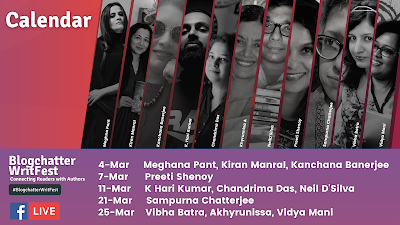
#BlogchatterWritFest: Season 6 Session 2: A writing class with Preeti Shenoy

When Blogchatterrevealed the author for the second session of the #BlogchatterWritFestival, I knew I had to attend it.

Preeti Shenoy was amongst the first people whose blog I used to frequent. From then to now, her journey has been an awe-inspiring one. 
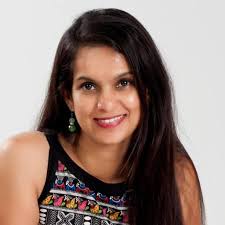

For those living under a rock, Preeti Shenoy is among the highest selling Indian authors. Her name is in the Forbes long list of most influential Indian celebrities. Motivational speaker, fitness enthusiast, and portraiture artist are some other titles she has in her kitty.

But more than all this, Preeti to me is a woman of substance and style. She knows how to captivate her audience with her pleasant disposition and her words. And what stands out is her amazing modesty and lively nature, a trait I have always appreciated in people.

Having read some of her books (right from '34 bubblegums and candy' to her latest ‘Love a little stronger’,  I could be certain this special workshop on ‘how to write engaging stories’ would have some valuable gems in store. 

And true to its word, it did deliver what it claimed. 

The session started with Blogchatter host Geethica giving a brief introduction on Preeti and her work. She then proceeded to ask her some pertinent questions per-submitted by the members. Preeti fielded each question with the expected finesse of a person who knows her craft. 

Here is a brief overview/recap of the workshop and my thoughts on it:

When asked how we can make the stories we write engaging, she offered some great advice like engaging the reader with writing hooks, preferably at the start and end of the story. 

I’ve come across stories that start with a bang and end with a whimper and I often fear my story may not be able to hold the readers attention to the very end. So inserting writing hooks was some great advice and a great reminder.

On the topic of starting points for short and long stories, Preeti emphasised that there is no particular rule. You can start at whatever point in the story. But for short stories, starting the narrative with the protagonist in action is always preferred. Get straight to the point. 

On creating relatable characters for your fiction, she suggested listing out his/her physical attributes, behavioural traits, everything up to the last detail, separately before starting off. That way, even if you don’t mention all the character traits, you know exactly how your characters will act in a particular situation. She also advised on creating real characters with real problems. 

Geethica then put forth another question: How much emotion do we pour Ina story? To that Preeti spoke about making the reader care about the character in your story, something i couldn’t agree more upon. We often label a book as a favourite only if it has moved us in some way. 

Preeti’s answer to how much reality she adds in her fiction was a refreshingly innovative one. While I’ve heard most best selling authors talk about incorporating a slice of life in their books, I have often wondered what truly interesting lives they must lead. Preeti, however, surprised me by saying, ‘Your Imagination is the biggest weapon in your arsenal.”  Now, doesn’t that answer wash away your guilt of living a perfectly ordinary life and open an entire gamut of new possibilities instead? What more can a writer wish for? 

On how to fight writers block, Preeti enumerated some easy-peasy techniques like trying to write like you are describing something (eg a room) to a blind man. If you are stuck in the middle of a WIP, she suggested you retrace and read it all over again…from page 1. That makes identifying and removing the ‘block’ in the story.

Other questions that Geethica asked included how to maintain the flow in the story, how to go beyond the personal narrative, how and where to add conflict etc. Preeti answered those by speaking about different methods like revising your plot every time you sit to write for a smoother flow, doing enough research, mapping the story line etc. 

The session was then open for questions by attendees. Here, Preeti offered helpful tips like balancing the right amount of dialogue and narrative. She suggested taking up creative writing courses that are extremely beneficial, especially in this regard. She also encouraged having the story read by an extra pair of eyes (preferably 2-3 people who read across different genres) and taking their opinion before submitting it. 

To sum up, the session was an extremely engaging and helpful one with important nuggets of information for all writers and not a dull moment. 

Thanks to Blogchatter for arranging this wonderful rendezvous with Preeti Shenoy for their I’m already looking forward to Session 3. 

Until then. cheers! 

-------------------------------------------------------------------

Written as part of BlogchatterWritFest.
March 07, 2022

#BlogchatterWritFest: Season 6, session 1: 'Relatability in fiction' (an overview)

When I first heard the topic for the first session at the #BlogchatterWritFest this year,  I was chuffed. 

Being an avid reader and writer myself, I often wonder where to tow the line between make believe and reality. How much of realism do we add to our stories? And if we do add a fair amount, then is it fair to call it fiction? Are all novels semi-autobiographical? 

With my head brimming with all these questions, I logged in onto Facebook live on March 4th at 7pm to attend the first session of Season 6, titled 'Relatability in fiction. 

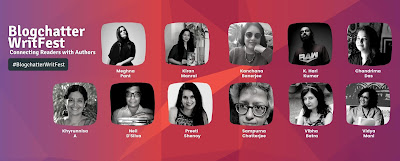
The panelists included three eminent writers of Indian fiction:

Kanchana Bannerjee, author of 3 books and has been a freelance writer for leading publications and reputed MNCs.

Kiran Manral, a writer, author, and novelist who has several published books to her credit. 

And last but not least, Meghna Pant an award winning and best selling author, screenwriter, journalist and speaker. 

The event started on time with a quick introduction from Harshita of the Blogchatter team who was hosting the event. She was accompanied by Meghna and Kanchana from their respective homes. Kiran was running late. 

Opening question: How can a author make a book focus on a social issue without sounding too preachy?

Meghna answered by speaking about her book that deals with a pertinent issue, 'Boys don't cry;. In today's society, where feminism almost always has a negative connotation, Meghna Pant tried bust the myth saying, "We women are neither bechaari nor krantikaari. Most of us are just normal naaris."

She also revealed that she, as a writer, uses comedy as a lens to make social issues accessible and to cut across mindsets and stereotypes. And that’s how she makes it relatable. 

Takeaway 1: Create balanced characters, especially women characters, because that is what women really are. 

The next question was directed towards Kanchana and was on how to avoid purple prose when it comes to writing fiction.

Kanchana answered by saying that one has to be extremely clear on what one is writing and then exercise some degree of restraint. On the topic of social commentary in fiction, she spoke about how it will inadvertently slip into everything you write, as authors too are part of the society and these things are unavoidable. 

Takeaway 2: Pre-decide your plot as much as possible. At one point, the plot/characters will surprise you by taking things in their hand. 

On the topic of trends and how they influence the writing of authors, Meghna elaborated on how the story you write should eventually outlive you as the author and the trend. 

She spoke about a time when she was asked to take up an androgynous pseudonym for the sales to improve. But she had declined (and look how far she has come) and stood her ground. She encourages writers to do the same—-listen to your instincts.

Kanchana, on the topic, suggested that it’s all about enjoying the process and not settling for anything less than thorough. 

Both agreed that writers should believe in themselves,even at the risk of seeming arrogant at times. 

I particularly liked the way Meghna wove in a bit of poetry, quoting Frost, to suggest that it’s usually the road less traveled that leads you to your actual journey. 

However, both writers gave one advice in common--never to give up a steady source of income as writing full time hardly brings in any money. So if earning is your aim, you may have to give a writing career a second thought. 

Takeaway 3: Have a backup career you can rely on or be prepared for a lot of hustle. 

On the topic of writing rituals, all three authors (by that time Kiran Manral who was running late had joined in) practiced the same routine, reminding me of Virginia Woolf’s ‘A room of my own’. Each of them said that all they needed to write was complete isolation in their respective rooms and the story idea in their head. 

Takeaway 4: You don't need fancy locations or plush surroundings for inspiration. When you have an idea, you only need a little quiet to work on it. 

When asked if there was a difference in the way they approach fiction and nonfiction, Kiran (being a writer of both) succinctly fielded the question by saying that fiction should be plausible and that it’s a paradox how fiction should be made as factual as possible. 

Takeaway 5: Larger than life characters are never relatable. 

The authors also shared their favourite books, most of which connected me with them immediately (as they are my favourite books too). Off the top of my head,  3 men in a boat, Gone girl, Gone with the wind, Little women were mentioned. 

When it came to the Q&A session, of my questions was picked up. I wanted to know what each writer would prefer: a relatable but relatively common story line or an innovative but bordering-on-absurdist plot? 

To which Meghna elaborated on how she’d prefer realistic and relatable and Kanchana explained how it was more about creating compelling characters and settings in order to keep the reader hooked. 

When asked what they decide on first, the story or the genra, all three agreed it was the story. 

Kiran whose wonky internet connection had resumed by then perfectly concluded the session by saying, ‘it’s the story that chooses you. ‘

To sum up, it was a wonderful session with lots to take home from. 

I have always believed we learn best from our own experiences and from the experiences of others who have treaded similar paths. And BlogchatterWritFest, in a wonderful little way, makes both these things possible. 

I look forward to the sessions ahead. 


Written as part of BlogchatterWritFest