April 07, 2022

#BlogchatterA2Z: F for ‘Fulancho Khuris’ - the Goan faith in miracles.

They say faith can move mountains. 

In today’s post of my A to Z series, I thought I’d talk about just that…the Goan faith in miracles. 

If you ever been down the NH17 road to Bambolim, you must have come across the shrine of the Holy Cross. 

In Goa, this is more popularly known as Fulancho Khuris, and that is the subject of today’s post. 

The foundation stone of the Church of the Holy Cross was laid by Archbishop Raul Gonsalves, in 1995. However, long before the Church was constructed, there was a cross on the side of the road. This was carefully preserved and a year later, on October 13th 1996, the Shrine was completed, blessed and inaugurated by the Archbishop, forming a protective shelter around the Miraculous Flower Cross. 


It is said that praying here is bound to make your wish come true. It is the sense of devotion among the people of Goa that instills a strong faith in miracles. 


You will witness people of all religious faiths alight from their respective vehicles and offer their respects to the Fulancho Khuris, with offerings of votive candles, flowers, or monetary contribution. 
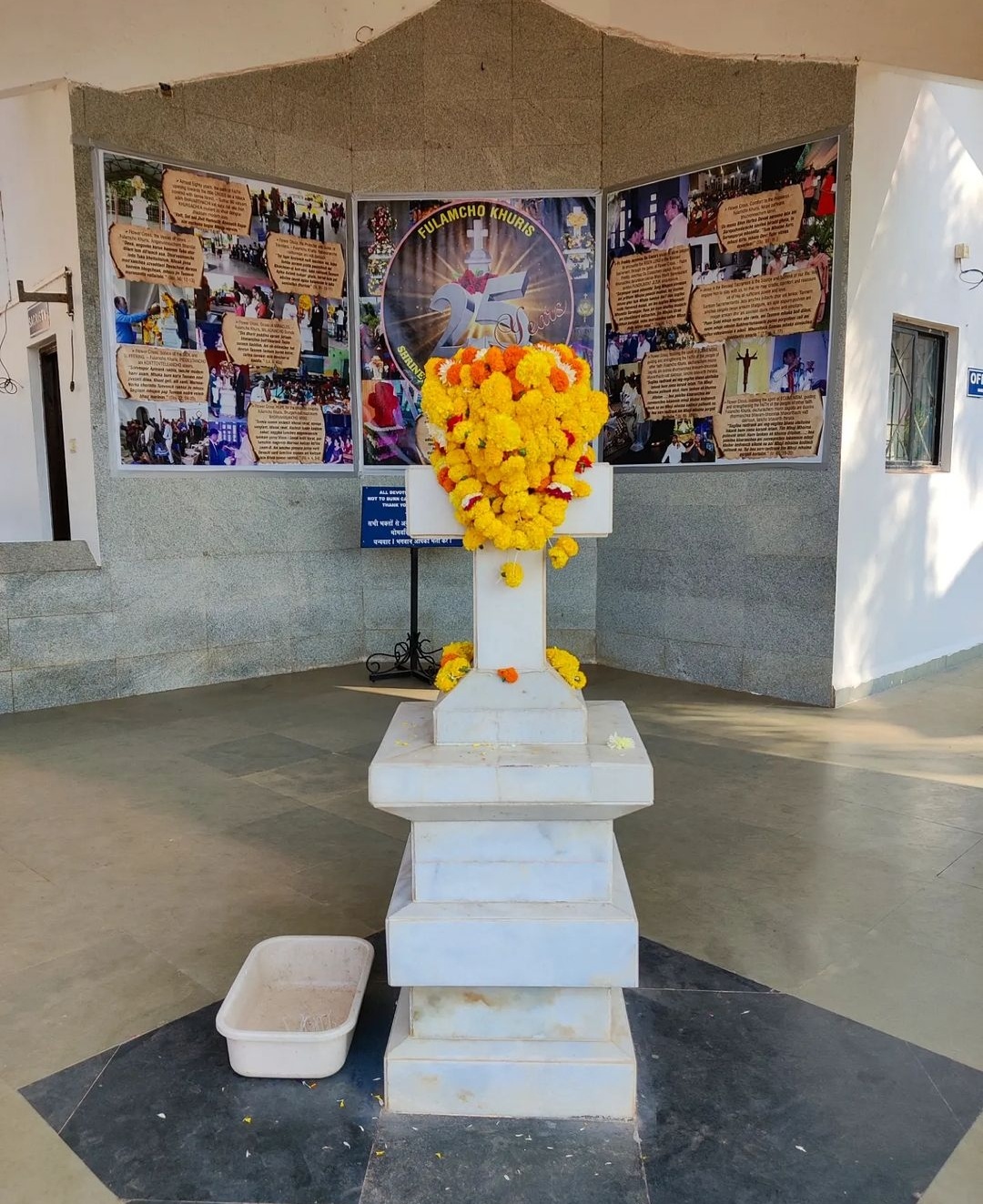

Most devotees pay obeisance to the Holy Cross by offering garlands of flowers, especially Aaboli, or Rozaa, and so the cross is always garlanded with orange and yellow marigolds, thereby attaining the title of ‘Fulancho Khuris’ (translated as ‘Flower Cross’). 


As for the votive candles, one either light the candles or deposit them in the box adjoining the cross. I once asked a local woman seller what happens to the unused candles in the box and she impressed me with the honesty and profoundness of her reply. 

“They are resold,” she explained. “If you offer a prayer by burning a bunch of candle, they will only carry the strength of your devotion. But if you deposit them in the box, someone else will buy them again, and before they are finally lit, they will be strengthened by the devotion and prayer of many.” 

If this was her business strategy, I was sold. 


I’m someone who isn’t really comfortable in praying in full view. I believe prayer is sacrosanct and should be done in private. But some exceptions need to be made. And praying at the ‘Fulancho Khuris’ is one such exception. 

Having personally stopped at the shrine a lot of times myself, especially before my Med School vivas, I can vouch for the serenity and calm this place offers. 

So engrossed are you in the vibe of worship here, that you almost ignore the sound of highway cars whooshing by.  

The Fulancho Khuris is a representation of this very devotion and faith, of simplicity and communal harmony. 

Of how Goans, young and old, rich and poor, irrespective of age, status, and religion, BELIEVE.. in a greater force, in a stronger good, in a heartfelt prayer, in an omnipresent God. 

And for this unwavering faith and devotion, we can only bow our head and say, “Obrigado, Goa!”


I will be back tomorrow with more on my lovely Goa. So stick around. 

Until then, 

Mog aasu di.

(Let there be love!)


--------------------

I’m participating in #BlogchatterA2Z. 

My theme for the challenge is ‘Obrigado, Goa!’, under which I’ll be writing 26 posts on Goa (April 1-30th, excluding Sundays), each post corresponding to the letters of the English alphabet. You can read more about it in my theme reveal post. 


April 06, 2022

#BlogchatterA2Z: E for Events in Goa to witness and celebrate.

There is a lot to celebrate in Goa.  Despite being the smallest state, Goa’s sandy beaches, mixed culture, Indo Portuguese architecture, lush greenery, diverse cuisine, and vibrant night life gives it much reason to be proud of.

And if that wasn’t enough to charm you already, we have major events you'd love to witness and celebrate, happening all year round.

Vital attractions for tourists and locals, these events are a reflection of Goa’s heritage and people.


Today's post talks about 5 of them. 

1) Carnival - a Popular Portuguese tradition,  Carnival is a remnant of the 400 year long Portuguese colonialism in Goa and is still celebrated with much pomp and fanfare. This is a festival of food, drink, music, dance and fun, extending over 3-5 days preceding Lent-the month when Christians observe fasts and abstain from meat and alcohol. Panjim is the centre of all activity during the carnival…buzzing with the excitement of pop up bazaars, and parading floats. You will find the streets decorated with colourful masks and streamers, trees lit up with fairy lights, and Goans in celebratory avatar. The floats are elaborate and extensive and are a sight to behold. A constant fixture in the floats is the legendary king Momo, a jovial, rotund character whose appearance signifies the beginning of all Carnival activities. 


2)

Grape Escapade - if you are a lover of good food and wine, this is one event you shouldn’t miss. Held in January every year (from 2005) at the huge courtyard of Inox theatre in Panjim, The grape escapade is a cultural/lifestyle event where wine tasting sessions are held for all wine connoisseurs, in the company of experts and wine manufacturers like Sula, Big Banyan, Zampa, Vintage etc. It is organised by Goa tourism Development Corporation as an attempt to promote tourism in Goa. However, Goan locals being the hedonistic lot that we are, end up thronging the event far more than visiting tourists. Other highlights at the event include dance performances and music by Goan artists, spot singers, and local bands, fashion shows, and the titular Grape Escapade Queen. So next time you intend visiting Goa, plan your trip around this time. It’s very likely that your favourite wine is available at an attractive discount and is waiting to be picked by you at the Grape Escapade. 


3) Sao Joao- if you are in Goa, and you see a group of inebriated men nosedive into the local well, chances are high that what you are witnessing Sao Joao. Celebrated on 24th January every year, Sao Java or St John the Baptist’s feast is a festival of joy, fun and excitement celebrated by Christians in Goa. While some say that the well is symbolic for ‘womb’ and leaping into it represents St John the Baptist’s  ‘leap of joy’ in his mothers womb on this day, there are others who think it represents the baptism of Jesus by John in the river Jordon. On this day, men, young and old are seen wearing flower crowns (locally called ‘copel’) on their heads. As part of the celebration, newlywed sons-in-law are invited to their wife’s maiden home. The mother then presents the daughter a takeaway gift- a basket of fruits, which she takes along to her new home and shares with her new family.

Also known as zavoiyache fest (feast of the son-in-law), this celebration sees newlywed men jump into wells, lakes, ponds, enthusiastically shouting ‘Viva Sao Joao’ amidst the beat of ghumot (village drums) and tashe (cymbals) to retrieve bottles of Feni and gifts thrown in by the villagers. The day is then spent getting drunk, feasting on sanna, mango, pineapple, jackfruit, and having the time of their lives. 


4) Shigmo - Held around March every year, this five day festival in the month of Falgun celebrated by the Hindus in Goa. Festivities start with prayers to the village deities. the Artistically-designed and beautifully-lit floats are paraded from Panaji and across Ponda, Vasco, Madgaon and Mapusa. Shigmo commemorates the arrival of spring, and the homecoming of the warriors who had left their homes and families at the end of Dussehra to fight the invaders.


5)

Narkasur' competition - one of the major events happening the night before Diwali, these competitions give away large sums of money as cash prizes for the best Narkasur effigy. For the uninitiated, Narkasur was the legendary demon king who ruled Goa, creating great havoc and unrest among his subjects. To save them from the torture, the people of Goa prayed to Lord Krishna for help. Thus ensued a grand battle between the Lord and the demon, which eventually resulted in Krishna using his Sudarshan Chakra to behead Narkasur and slit his tongue. He then smeared the blood of the slain demon on his own forehead as a sign of victory, of the good that triumphed over evil. The effigies of Narkasur made by Goans are a sign of this very victory. Made from waste paper, grass, cloth, and stuffed with firecrackers, these are paraded around the city alongside a young boy playing Krishna. While North Goa parades effigies that are stationary in nature, South Goa has the more mobile ‘dancing’ narkasurs, portraying the continuous battle between Krishna and the demon king. The competitons usually held till the wee hours of the morning. At dawn, the effigies are burnt amidst a lot of fireworks and enthusiastic cheer. And this heralds the beginning of Diwali. 


It is no secret that we Goans are a festive lot. We honour the old and embrace the new, always finding reasons to celebrate. To make merry. To spend time in the company of those we love and respect. 

In today's post, however, I wanted to only write about events specific to Goa. Events that will not be witnessed anywhere else (more of these will follow in the posts to come).

And for all the bonhomie and cheer Goan events bring about, for the togetherness and harmony they inspire in us, for the humble joy in small gestures, we say, ‘Obrigado, Goa!’

I hope you come back tomorrow for yet another fascinating feature of my wonderful state.

Until then, 

Mog aasu di.

(Let there be love!) 


--------------------

I’m participating in #BlogchatterA2Z. 

My theme for the challenge is ‘Obrigado, Goa!’, under which I’ll be writing 26 posts on Goa (April 1-30th, excluding Sundays), each post corresponding to the letters of the English alphabet. You can read more about it in my theme reveal post. 

April 05, 2022

#BlogchatterA2Z: D for Desserts for the Goan sweet tooth.

Those who have read my post on Goan cuisine yesterday must be wondering why I did not mention a single sweet in the list of specialities. Is it because I was so caught up on the main course that I forgot to order dessert or don’t we Goans have the proverbial sweet tooth? 

Well, the answer to that is neither.  We Goans have not just one sweet tooth, but multiple sweet teeth (ok sorry, excuse the poor pun). 

And so today I present to you an extension of yesterday’s post, that I'd been saving for today's alphabet of the #BlogchatterA2Z series. D for 'Desserts'.

So before I sound like Chunni Babu from the much acclaimed 'Devdas', let me distract you with a list.

A  list of delectable desserts you must try when in Goa:

1)


Pasteis de Nata (or Pastel De Nata) is a Portuguese tart pastry filled with egg custard. The outer puff pastry is baked to a  crisp brown and dusted with cinnamon. It was originally created by the catholic monks in Lisbon, who following the liberal revolution of 1820, started selling the confectionary Goa nearby sugar refinery to bring in revenue. When the monastery closed in 1834, the monks sold the recipe to the sugar refinery who then opened Fábrica de Pastéis de Belém and is  safeguarded there even today. 

However, this gastronomic wonder (of Portugal) is attempted by a few eateries even in Goa, the best among them being  the Jila bakery of loutolim. 


2) Serradura ('sawdust pudding') Originally from Portugal, this dessert became famous in Macau when the Portuguese colonised it.

Since Goa was also a Portuguese colony, the dessert became popular here as well. Soft and creamy, Serradura is made by layering whipped cream, condensed milk, and Marie biscuits (crushed to render it a sawdust texture).


3)


Dodol - a thick creamy brown pudding made using coconut, jaggery, and rice flour made commonly in Catholic homes during Christmas and is an important constituent of Kuswar (Christmas Consoeda) in Goa. 


3)


Bibinca - a multilayered (7 to16 layers) egg-based Goan dessert that is made mainly of flour, sugar, clarified butter, egg yolk, and coconut milk. Best served ala mode. The origin can be traced back to Portuguese . Legends claim that it was Sister Bebiana, a Portuguese nun in the 17th century that invented bibinca, and hence the name. 


4) 

Bolinhas - Goan cookies made from semolina and coconut. These are crisp on the outside and soft inside. Usually had as a tea-time snack but is included in Kuswar along with Bibinca, Doce, Dodol, and other sweets.


5)

Plum cake - not  to be mistaken with fruit cake or rum cake (other popular varieties of cakes in Goa), the plum cake is a dense non-boozy cake that has a distinct flavour of candied orange rinds and blackened sugar. 


For the vegetarians: 

6)

Peraad - Made essentially with guava purée and sugar, Peraad or Guava cheese is a soft melt-in-your-mouth confectionary  made especially during Christmas. As a child, I often wondered about the red colour only to realise much later that it was attained with a drop of food colouring.

7) 
Nachni Satva - made from Nachni or ragi, this dessert is commonly made in Hindu households in Goa. Rich in calcium, Vitamin C, and Iron, this is one healthy yet absolutely scrumptious dessert you’d kill to eat.


8) Tavsali - a delicious Cucumber cake, traditionally made in Goa, with rawa, coconut, and jaggery.


9) Dhonas - jackfruit cake similar in preparation to Tavsali but made of jackfruit pulp instead of Ragi. 


10) Kelyacho halvo - a Goan dessert made by caramelising thin Banana (Myndoli type) slices in sugar and ghee.


11) 

Neuryo - similar to the Maharashtrian karanji, the Goan Neuryo is a common traditional sweet made for both Hindu and Catholic festivals  like Ganesh Chaturthi, Diwali, and Christmas.


12) Mangane - a traditional Goan kheer made using sabudana, chana dal, cane jaggery, and coconut milk.


13) Kangachi kheer - Made mostly on Gudi Padva, this is a kheer made of sweet potato, coconut milk, jaggery, and rice. 


14)

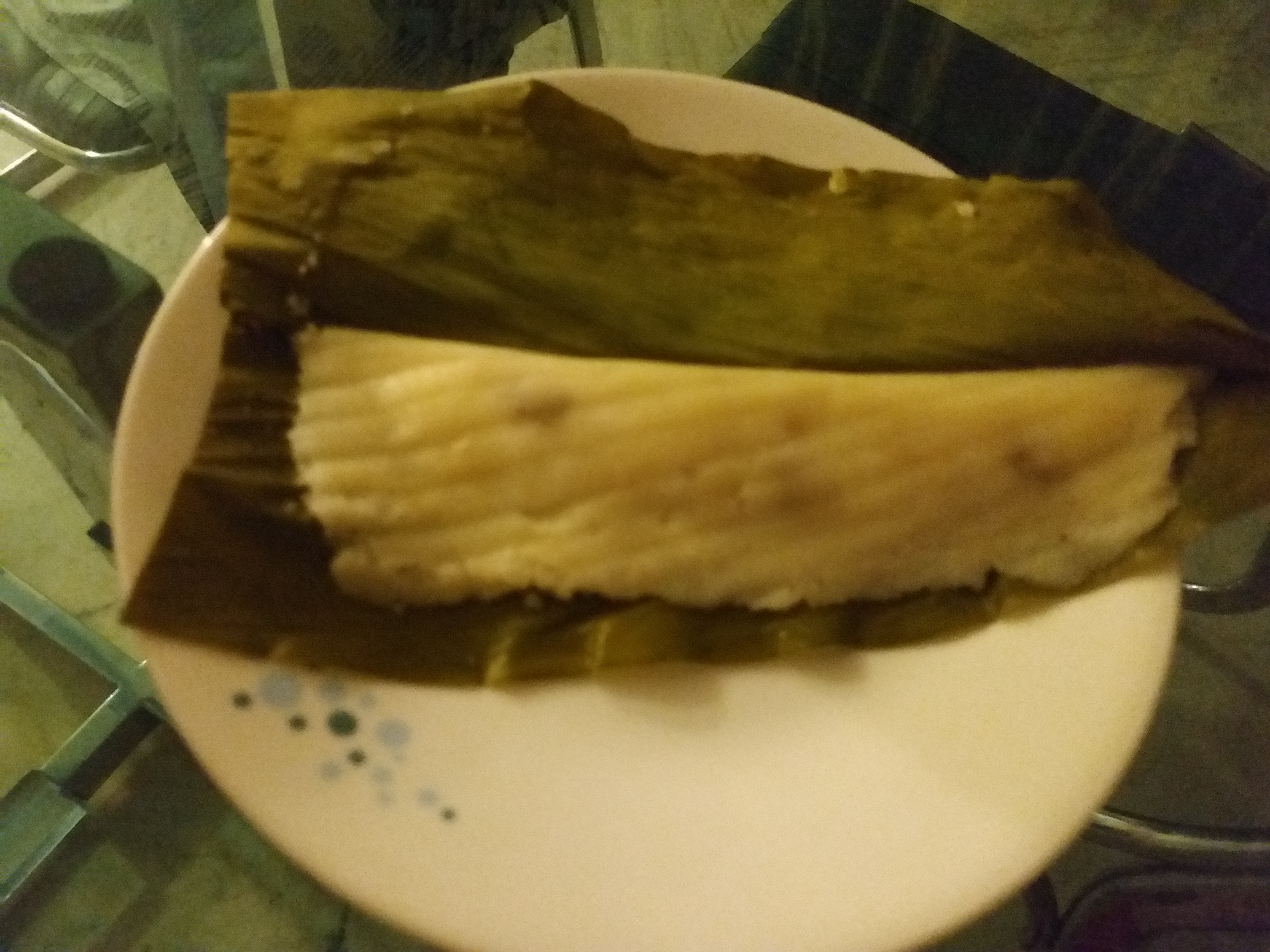
Patoleo - Prepared with rice (outer covering), coconut and jaggery steamed in turmeric leaves. Made usually on Nag Panchami, Ganesh Chaturthi, and feast of the Assumption of Mary, this is a traditional Goan sweet loved by all Goans. 

And the list goes on…

Initially I had decided to restrict myself to just five Goan desserts. But as I wrote, I realised I could do an entire A-Z only on Goan sweets and desserts and there still would be some remaining. 

Whether enumerating or enjoying, when it comes to desserts, we Goans really don’t know when to stop. 

And for this sweet privilege, we, in all humility, have just one thing to say; ‘Obrigado, Goa!’


I’d love to know your favourite Goan dessert, or what you think should be added to this list. So do leave a comment to tell me you were here. 

And don’t forget to join in tomorrow for yet another riveting feature of Goan life.

Until then, 

Mog aasu Di.

(Let there be love!) 


--------------------

I’m participating in #BlogchatterA2Z. 

My theme for the challenge is ‘Obrigado, Goa!’, under which I’ll be writing 26 posts on Goa (April 1-30th, excluding Sundays), each post corresponding to the letters of the English alphabet. You can read more about it in my theme reveal post. 

April 04, 2022

#BlogchatterA2Z: C for Cuisine -a lot to love on the Goan plate.

One of the most important aspects of any culture, undoubtedly, is its cuisine.

Food provides nourishment for the body and the soul. A well cooked meal not only satiates the palate but also satisfies the mind by triggering the release of Serotonin, the ‘happy’ hormone. No wonder we Goans are inherently happy people. Maybe the food we eat has a lot to do with it. 

Goan cuisine is largely influenced by its Goa’s history and geographical position in the Indian  subcontinent. 

The subtropical climate and coastline location ensures that Goa is surrounded by rice fields,  coconut trees, and spice plantations. It is no wonder therefore that seafood, rice, coconut and spices play such an integral role in the Goan kitchen

The origin of the Goan cuisine can be traced back to its various ruling empires; French, Malabar, Sultanate, Portuguese, Malaysian, Chinese etc. 

However, it was the Portuguese (who ruled Goa in the 16th century) that brought along with them a rich bounty of spices, tomatoes, cashews, chillies, potatoes etc. These along with the native produce of coconut vinegar, kokum, palm jaggery, and tamarind came to constitute Goa’s legacy of flavourful cuisine. A confluence of east and west. Foreign and local…the best of both worlds. 


Let’s talk local: 

Goa has a rich variety of indigenous fruits and vegetables. 

These include:

1) The Goan variety of mushrooms (almi)

2) Bottle gourd, locally called ‘Ghosali’

3) Vinegar (coconut vinegar and palm vinegar)

4) Kokum

5) Tamarind 


These vegetables are cooked in authentic  Goan masalas that have the power to take your cooking to another level.  However, we Goans are extremely secretive about our recipes. We may invite you to a home cooked meal, but ask us to partake with our Goan special masala and we will laugh it off. No daughter of the soil will willingly trade her homemade masala for any amount of money. However, if you look in the right places, you may still find an occasional local home business marketing masalas that are pretty close to the real deal. Popular among these are the Xacuti masala, Rachaedo masala, Caldin masala, Cafreal masala, Balchao. These are usually used to cook gravies of chicken and sea food but can be used to make vegetarian curries as well. 


The staple Goan diet:

They say you can remove a Goan out of Goa, but you can never remove Goa out of a Goan. 

Ask any food-loving Goan (especially one away from home) to talk about Goa, and he will have mentioned rice and fish curry within the first thirty seconds of the conversation.  

Traditionally, the Goan plate would ideally consist of xiit (rice), hooman (fish curry), fried fish, kismur, sol kadhi, bhaaji (cooked vegetable) and miscellaneous.

Xiit - Most Goans prefer to eat rice made of  ukde tandul (par boiled rice) as opposed to that made of white polished grain. Although a little course in texture, this variety of rice is rich in Vit B and is a lot healthier than the more refined white rice. 


Hooman - this is usually made by grinding coconut, chillies, turmeric, and tamarind and then cooking the fish in this mixture. Fish usually used are prawns, kingfish, mackerels. Coconut milk is added as per preference. Hooman is a rich source of Omega 3 that helps combat depression and increases immunity.


Sol kadhi
- a refreshing blend of mildly sweet coconut milk, kokum and tempered Indian spices, this is known to cool the body in the scorching summer heat and also has digestive properties.


Kismur
- a crunchy dried-fish salad made usually from dry shrimp or dried fish like mackerel and constitutes an extremely popular accompaniment to Goan fish curry and rice.

Other dishes to try are Goan chicken Cafreal, prawn balchao, chicken xacuti, crab xec xec,  rachaedo masala. 


For the vegetarians: 

“Goa is not for vegetarians” is a popular belief among tourists. And it’s time this myth got busted. 


Here are some lip smacking Goan dishes for the vegetarian soul: 


1
) Khatkhatem - a mixed vegetable stew that is usually served with rice. It is made by mixing Toor and Chana daal with carrots, potatoes and peas and cooking this in a spicy paste of coconut and red chillies.

2) Sanna - made from coconut and rice, these are the flavourful Goan version of the South Indian Idli.  

3) Moogachi gaathi - sprouted green gram in a coconut based gravy, this preparation (without onion/garlic) is commonly prepared in Hindu households during religious festivals and makes for a scrumptious meal in itself when had with rice or roti.

4) Ambadyachi uddamethi - a dish prepared by cooking hog plums in a thick coconut gravy with a number of flavours thrown in for good measure. Commonly prepared in local households during Diwali. 

5) Goan style tonak - Alsandyache - a rich gravy made with black eyed beans and fresh grated coconut, tempered with a melange of roasted masalas. It is also prepared with chana, masur, chavli, almi etc and serves as a good accompaniment to any Goan meal. Some preparations of tonak include cashew nuts or dried jackfruit seeds. Often eaten for breakfast with undo (local variety of bread). Made in the right way, the Goan tonak can feel like an entire symphony of flavours playing in your mouth. 

Another popular breakfast item in most Goan cafés is mirchi bhaji and salaad (pronounced with a lilt in the second half, not to be mistaken with ‘salad’). I’m not a big fan of the latter, but most Goans are. 


Truth be told, there can exist a Goan version of everything you eat. Given any vegetable, fruit, or fish, we Goans love to add our own twist. It is said that Sachin Tendulkar once requested the owner of Martins Corner (a popular restaurant in South Goa) for the recipe of his famous Goan crab preparation. So impressed was he by the delectable preparation that he was willing to pay a hefty sum to introduce it in his restaurant in Mumbai. 

No points for guessing what happened. The God (of cricket) was politely declined. The Martins' crab still remains his favorite dish. But he has to come to Goa to eat it. 

On that anecdotal note, I come to the end of today's post. Goan cuisine, however, has no end. No end to variety or flavour. To modesty or authenticity. No end to hospitality. To warmth. To love.  And for that we say, ‘Obrigado Goa’. 


Stay tuned for tomorrow’s post about yet another wonderful facet along the same line. 

Until then, 

Mog aasu di

(‘Let there be love!’)


---------------------

I’m participating in #BlogchatterA2Z. 

My theme for the challenge is ‘Obrigado, Goa!’, under which I’ll be writing 26 posts on Goa (April 1-30th, excluding Sundays), each post corresponding to the letters of the English alphabet. You can read more about it in my theme reveal post. 

April 02, 2022

#BlogchatterA2Z: B for 'Big Foot' - Goa's open-air heritage museum.

If the Azulejos from yesterday’s post managed to spark your interest in Goan history and heritage  and prompted you to gain better insight into Goa’s cultural evolution over the ages, then today’s post is just what you will want to read (and carry in your mind) before your next trip to Goa. 

Located in Loutolim, South Goa, Big Foot is an open air museum, which for a small fee, takes you on a journey of Goan tradition and heritage, replete with the innocence and simplicity that comes with a folksy village life. 


Being a Goan, I’d say a lot in Goa has changed over time. The current vision most people have of Goa is one of tourist crowded beaches, rave parties, and reckless water sports. Ask a non-Goan to stretch his imagination and paint a picture of Goa beyond this, and he will rack his brains and finally come up with hibiscus dresses, straw hats and a bottle of Feni. Ask him to widen it a little more and he may throw in a jolly folk song like ‘hav sayba paltadi vata’ or a more humorous ‘undir mama aaylo’ that he has picked up from some stereotyped Goan caricature on the silver screen or Goan wedding band.  

But I will not blame him. It is almost impossible for someone to know and understand the cultural ethos and history of a place in a few hours, leave alone days…unless of-course you visit a museum. 


And a trip to Loutolim’s heritage museum promises to do just that. In a fun and lively manner, Big Foot makes you aware that Goa is much more than what is portrayed onscreen and on tourist brochures. Goa is simplicity. Goa is humility. 


With the help of lifesize sculptures, artificial lakes and waterfalls, miniature houses, and an recorded audio guide to walk you through the plethora of aesthetically designed features, this museum becomes a place of reverence to Goa and all things Goan. 


The legend of Big Foot:

There is a story behind how the museum got its name. It is said that there once lived a wealthy landowner named Mahader, who was a kind and generous soul. He always helped the poor and needy, Nobody who approached him for help would go empty handed. His greedy neighbours, however, took advantage of his giving nature and fleeced him of all his money. Even after being subjected to abject poverty and the loss of his wife, he did not complain and maintained a strong faith in God. Seeing this, the Gods were impressed and offered him a boon. However, all Mahader asked for was a small place to stand and pray, whereupon he was granted his wish, given a hot rock. Mahader stood on one foot on that rock and prayed. So pleased were the Gods with his devotion, that they blessed him with a place in heaven. The footprint on the hot rock still remains, and it is believed that anyone standing on the big foot (print) and praying with good faith and a pure heart will have his wish fulfilled. 

The tour at Big Foot is designed in an informative and anecdotal manner that keeps you engaged and interested. The sculptures of working people, old furniture, various artefacts, even sets of tools used for farming in Goa will regale you with facts about its ancient history and lifestyle. They highlight different aspects of the quintessential Goan life, like food habits, dressing style, and local occupations that contribute to the Goan economy even today. 

Two major attractions: 

It is easy to be overwhelmed by all you behold. But one cannot miss out on two major exhibits. 

One is an optical illusion of sorts...a statue of Lord Shiva that appears to have its eyes open when viewed from a distance and eyes closed when seen from near. 

And the second is a huge 46feet 2inches horizontal sculpture of Mirabai, carved out of a single laterite stone. This has been recorded in the Limca book of world records as the longest laterite stone sculptures. And is known to have been carved by MJA Alvares in about a months time. 

Both these wonders are a joy to behold and make for beautiful memories to return home with. 


The Big Foot museum is a great place to learn especially for children who gain more knowledge from show-and-tell expeditions than from the pages of a book. 

A one-stop to witness the confluence of culture, art, and heritage, this is a place every local and tourist should visit at least once.

For the old world charm that today’s generation may not know about, for the humility of a quaint village life and inherent hospitality, simplicity and joi de vivre that Goa inspires,  we bow our heads and in gratitude, say, ‘Obrigado, Goa!’ 


Stick around for yet another delicious aspect of Goan life, coming Monday. 

Until then, like we always say, 

Mog  aasu di. 

(Let there be love!)

————————


I’m participating in #BlogchatterA2Z. 

My theme for the challenge is ‘Obrigado, Goa!’, under which I’ll be writing 26 posts on Goa (April 1-30th, excluding Sundays), each post corresponding to the letters of the English alphabet. You can read more about it in my theme reveal post. 

April 01, 2022

#BlogchatterA2Z: A for Azulejos - where art meets Goan identity.

Those who have visited Goa at least once in their lifetime will vouch for the beguiling beauty of the Portuguese influenced architecture. 

Houses built with red bricks of laterite stone with sloping tiled roofs and an elevated front step (colloquially called ‘Balcao’)  are a typical sight here. 

However, my first post of the #BlogchatterA2Z series, is about an aspect of Goa’s architecture that is not glaringly obvious and often underrated, a feature of Goan heritage you may not know much about, especially if you are a visiting tourist.

So for the uninitiated, let me tell you a little about Azulejos. 


The term Azulejos has a Spanish, Portuguese, and Arabic origin. So while a lot of people would argue over its pronounciation, most Goans would stick to the Portuguese manner of pronunciation and call it ‘Aa-zoo-le-zhoosh’ as opposed to the Spanish ‘ah-soo-le-haws'.


What are Azulejos? 

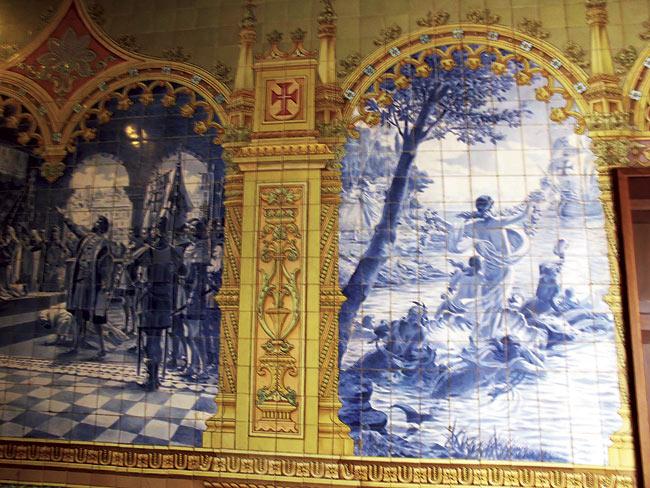
Azulejos are ceramic tiles that are hand painted and glazed. In Spanish, Azulejos mean ‘polished stone’ and that is what these essentially are.


Preparation: The creation of Azulejos is a long and tedious process. First, clay and water are mixed together to form a dough. This dough is then spread over a tray, cut to size, dried and fired at high temperature. It is glazed with powdered glass, after which the tiles are drawn over straight with a stick or powdered charcoal. They are then painted (with glass powder and oxides) and fired again at 1050 deg C to fuse the glaze. 


History: 

If you dig deep to find their roots, Azulejos have quite a travelling heritage, tracing back to 15th century Arabia. Apparently, they then traveled to Seville in Spain, and later in the 16th century to Portugal, who introduced them to Goa.

However, with Goa’s liberation in 1961, the popularity of Azulejos died down. Until much later, cut to 1998, when a young Goan Orlando Norhona, went to Lisbon to study music and literature, and through a serendipitous twist of fate, met a man who introduced him to Azulejos. Orlando was so fascinated with what he saw, that he learned the technique of creating Azulejos. He returned to Goa with a bag full of tiles and a mission…to revive Azulejo art in Goa. 

You can check his interview here.


Motifs: 

The earliest Azulejos had interlocking, curvilinear, geometrical or floral motifs influenced by Islamic (Arabia) ideology. Later, they underwent a massive influence of Spain, Portugal, and even extended to colonies in the US. 

Today, in Goa, you will find available Azulejos of different sizes and shapes, painted with a multitude of colours. 

However, if you look carefully, you will still discover the traditional blue and white pattern of Azulejos in old churches and places of historical importance. 


Popular motifs include remnants of a slowly disappearing culture…toddy tappers, fishermen, boats, ferries, taverns etc, 

Goan churches and temples are another common theme. Decorative panels and inlay designs have ethnic themes like religious symbols, peacock, lotus, flowers etc. 

Themes from the Bible can also be seen depicted…eg  in the famous St Anthony’s Church. 


Seen at: 

Azulejos are a common sight decorating walls of hotels, railway stations, cafes, guest houses, and even traditional Catholic homes and buildings. They are used to create wall murals, decorative panels, and name plates. 

A few glorious examples are found at: 

1) Menezes Braganza in Panjim - where there are magnificent 200 sq feet murals painted by Jorge Colaco of Vasco Da Gama’s sea route to Goa in 1948. 

2) Azulejos stores like Velha Goa , Goa ceramics, Orlando Noronha’s Galeria Azulejos De Goa etc. 

3) Condolim Church

4) Pilar reconciliation chapel 

5) Bishops house 

6) Orlando De Noronha’s gallery has a Mario Miranda collection in which he replicates Mario Miranda’s famous art characters on Azulejos. 


Purpose: 

1) Major feature of Goa’s architectural scene. 

2) Azulejos serve as good souvenir for tourists visiting Goa who want to take back home a slice of Goan heritage, it’s art and culture (commonly picked up are Azulejos with Mario Miranda caricatures—a tribute to the Goan artist). 

3) Azulejos are now used to decorate not just walls and create murals but also employed nowadays to make photo frames, jewellery, and exquisite pieces of crockery. 

However, nothing can take away from the fact that Azulejos were, are, and will hopefully always be a part of Goan culture and heritage.

You may see these glazed tiles only for its ornamental value, as a mere souvenir or gift item. 

But only a true Goan will know that Azulejos are much more than that. 

A testimony to the past. A legacy that deserves to be preserved and cherished. A story that needs to be regaled for generations to come. 

A story of who we are. A story of our roots.

And for all that Goa has endured, witnessed, and cherished over the ages, we have but one thing to say, ‘Obrigado, Goa!’


If you are interested in knowing a little more about Goan life and culture, come back tomorrow to read about yet another riveting representation of our heritage. 


Until then, like we Goans say, 

Mog aasu di.

(Let there be love!)


————————

I’m participating in #BlogchatterA2Z. 

My theme for the challenge is ‘Obrigado, Goa!’, under which I’ll be writing 26 posts on Goa (April 1-30th, excluding Sundays), each post corresponding to the letters of the English alphabet. You can read more about it in my theme reveal post. 

March 23, 2022

#CauseAChatter: 10 routes to happiness and good mental health.

"Happiness is a state of mind. It's just according to the way you look at things." 


- Walt Disney 


Every year, March 20th is celebrated  as the International day of happiness across the world. The main aim of this day is to raise awareness on the importance of happiness in our lives.

This year, the theme was ‘Keep calm, stay wise, and be kind.’

And that led me to think about how we can implement this in our lives in the best possible way.

‘Happiness’ is an extremely fluid concept. It can mean different things to different people. But the truth remains that chasing it has little meaning. The mad pursuit of happiness is often futile, for it is both illusory and ephemeral.

We know butterflies, like happiness, are never within reach when pursued. They will settle wherever they want, whenever they want. Agreed? 

Now ask yourself this; What type of flower will the butterfly be more attracted towards? Will it be drawn towards one of bright vibrant hue and sweet fragrance or will it tend to settle on a drooping flower that is dull in color and scent? 


For those of whom the penny hasn’t dropped yet, the ‘flowers’ in the above scenario are metaphors for human personalities just as the butterfly is a metaphor for happiness.

And so here are ten easy ways to brighten our moods and invite contentment into our lives. 

Almost all of these have to do with mental health and that should be enough to show you that happiness, if anything, is purely a state of mind.


1) Start a new hobby – studies have proven that channeling your mind towards a favorite activity brightens up not just your mood but also your personality. So unless your hobby is to rob a bank or indulge in useless gossip, you keep going.


2) Reconcile a broken relationship. One truth I have learned  in life is that ‘sorry’ and ‘thank you’ are the most underrated words in the human dictionary. We hardly understand their true value. That is  is why we use them so sparingly. So next time you mess up, apologise. Tell the people you love how grateful you are to have them. See how it mends the cracks, both in your relationships and in your heart.  


3) Spend time with your loved ones – This is one sure shot method to keep the crazies away. Surround yourself with positive vibes. Spend quality time with those you love. Communicate!


4) Maintain a gratitude journal – When you feel life getting too dreary, close your eyes and count your blessings. Then jott them down for you to read on another ‘not so good’ day.


5) Adequate sleep, rest, nutrition, and exercise  -to maintain good health. – A fit body and a happy mind always go together. So try and keep yourself as healthy as possible. Avoid junk food, take your vitamins, exercise. Small steps towards a larger goal.


6) Spend time with a child – Do this sometime. Spend time with a baby or toddler; either your own or a friend’s (of course with their parents consent---you wouldn’t want the police looking for you). They show you how innocence still exists in the world.


7) Read – Who doesn’t know the positive effect of reading? Read as a hobby or as a distraction. Read fiction. Read non fiction. Read poetry. Read plays. Read magazines. Read labels on milk cartons if you please. But read! It only helps better you as a person.


8) Meditate – Choose a quiet cozy spot near a window in your home. Close your eyes and block out all the negative energy. You can try yoga or chanting techniques, these help to allay anxiety.


9) Smile more often – even at times when you feel the need to fake it. A grumpy disposition will only repel energy radiators and attract the energy drainers around you.


10) Practice all the steps above throughout the day. Start by saying ‘I can do it. I’m going to be happy from now on.’ (the power of positive affirmations)


The key to a happy life is to confront every emotion that you feel. Acknowledge it, accept it, and in time, let it go. 

Of course, it is not always easy. But remember, if today, you fail, don’t be too hard on yourself. There is always tomorrow. 

———————————————-

This post is part of Blogchatter’s CauseAChatter.     

March 19, 2022

#BlogchatterA2Z: Theme reveal: ‘Obrigado Goa’

Back in 2019, a thread on my Twitter newsfeed caught my eye. It was from Blogchatter, a blogging community that I had been a dormant member of. The thread was about the A2Z writing challenge…wherein the participating bloggers had to write posts on subjects corresponding to the 26 alphabets of the English language. 

My curiosity was piqued. I wanted to be a part of it. However, it was almost mid April then. That meant I was late to the party. 

So I promised myself I’d take it up the following year. 


And then, Bam! The world got hit by a virus, and we all know how that went. 

Anyway, long story short, we made it this far. And I think you will agree with me when I say that given the situation at hand, that is good enough reason to celebrate. 

This year, I intend typing up some loose threads. And one of them is the long pending wish to write for #BlogchatterA2Z.  I’m looking forward to this journey of writing, reading, and interacting on the blog all through the month of April. 


So without further ado, I reveal to you the theme of my A2Z series. 


‘Obrigado, Goa!’ (psst! This is where you imagine the sound of loud applause and fireworks.)


‘Obrigado’ is a word of Portuguese origin and is used commonly among the locals in Goa. It means ‘thank you’. 


Why ‘Obrigado’? 

Well, because firstly, I’m Goan and I just realised I haven’t been saying that enough…at least not here on the blog. 

Coming to the second and more important reason, I believe much of Goa’s splendour is taken for granted by its people; unappreciative locals who have forgotten its worth, visiting tourists who form half baked impressions based on tourism brochures and Bollywood movies, new generation ‘metro’philes who are ashamed of their small town heritage and crave to live in metros instead; ‘Obrigado, Goa’ hopes to be an eye opener for them all. 


Highlighting different topics; history, culture, food, sites of significance; this series will talk about everything that is precious to Goa. That which makes us Goans swell with pride. That which Goa would be incomplete without. That which you as a tourist wouldn’t want to miss, or you as a local would love to reminisce over. 

In a nutshell, my series is a collection of all that would make one want to take a deep breath, smile, and say, ‘Obrigado, Goa’.


So be prepared to fall (more) in love with my hometown.


Starting April 1st…


I’m participating in #BlogchatterA2Z.